Thermal camera: a temperature anomaly is not a photograph inside the wall.
Thermography is powerful when it addresses a precise question and conditions allow a valid comparison.
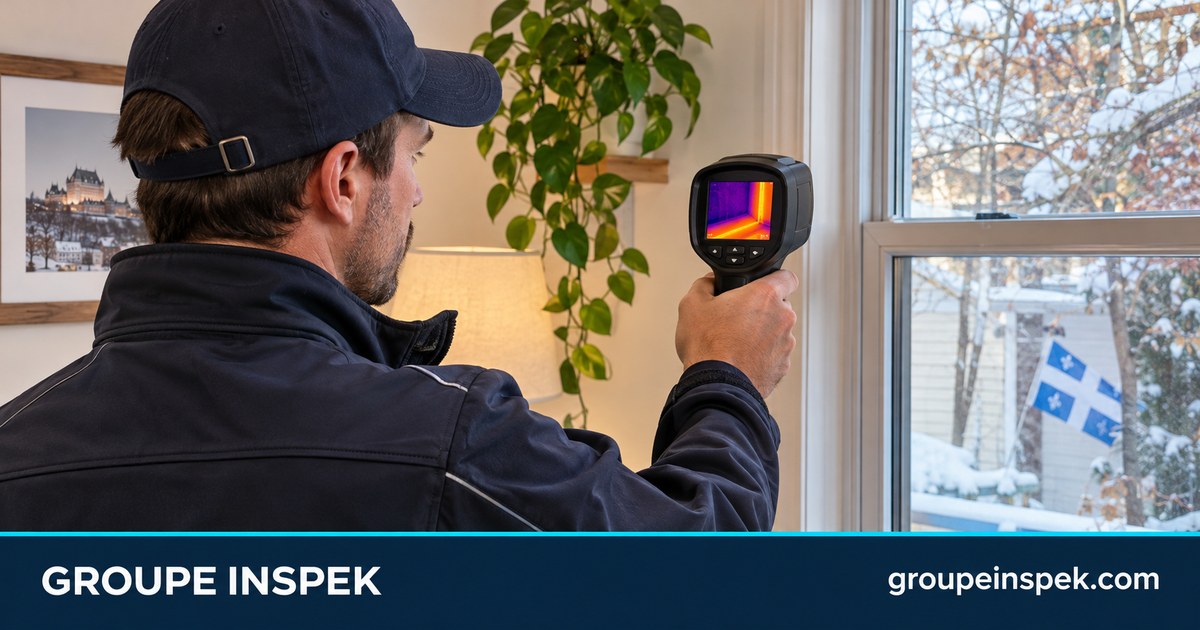
The best use of a thermal camera is to guide the investigation: locate, compare, corroborate and explain — never conclude from colour alone.
What the camera measures
It measures infrared radiation from surfaces and calculates apparent temperature. The image therefore represents the observed surface and is influenced by material, angle, reflection and environment.
Why colours can mislead
Palettes are selected by the operator. A high-contrast area is not necessarily very different in temperature. Metals and glazing may reflect surroundings and create misleading patterns.
Moisture, insulation and air
An unusual area may be compatible with moisture, insulation variation, a thermal bridge or air movement. It should be compared with reference areas and, when appropriate, checked with a moisture meter, close examination or another method.
Suitable conditions
Indoor-outdoor temperature difference, sun, wind, rain, time of day and system operation affect results. The report should identify limitations that affect interpretation.
Sources and references
The following sources frame and support this content. The service agreement and the standard applicable to the assignment remain controlling.