
Backwater valves: essential protection that must remain accessible and maintained.
A backwater valve allows normal drainage toward the sewer while limiting reverse flow toward protected fixtures. The correct type and location depend on the building’s drainage configuration.
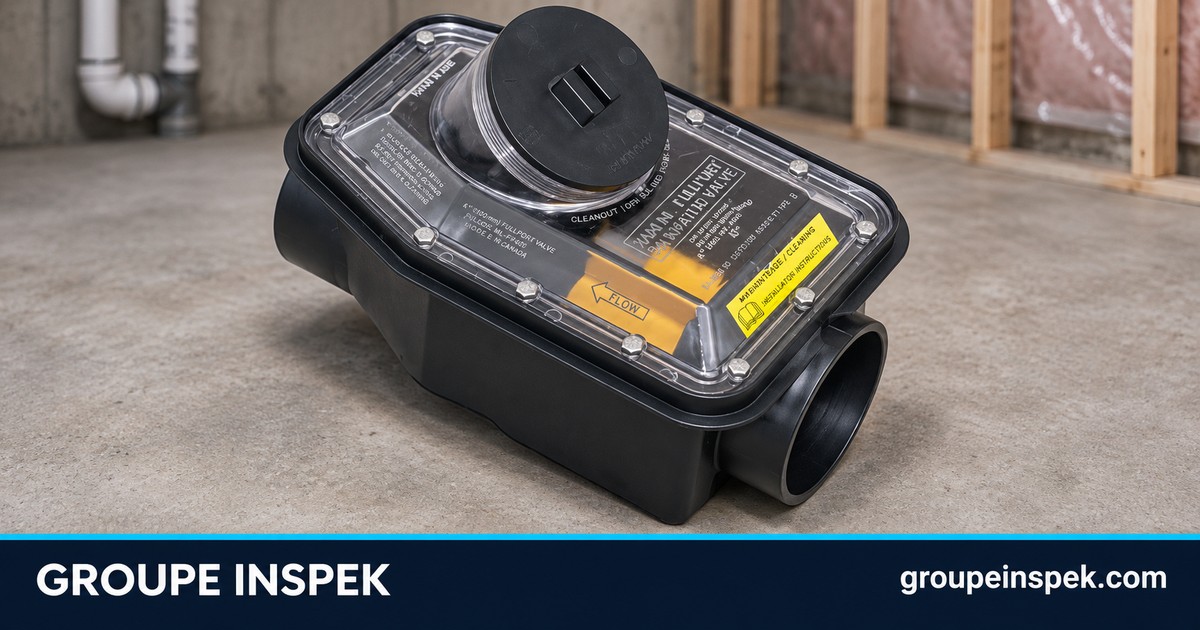
A concealed valve, debris-blocked flap or incorrect installation may fail to protect the building. Have a licensed plumbing contractor verify the configuration and follow the manufacturer’s maintenance interval.
Why is one valve not always the answer?
Sanitary, storm and combined drainage systems are not protected in the same way. The RBQ identifies the fixtures and piping requiring protection and the permitted valve types. An incorrect arrangement may obstruct building drainage or leave some fixtures unprotected.
Normally open or normally closed
A normally open valve generally leaves the passage clear and closes during reverse flow. A normally closed model opens under discharge from the fixture. Their applications and locations are not interchangeable; installation must follow the Code, municipal requirements and manufacturer instructions.
Access and maintenance
- Keep the cover accessible rather than burying it beneath a permanent finish.
- Inspect and clean the flap, seals and seat as directed by the manufacturer.
- Remove deposits preventing full closure without damaging components.
- Recheck the device after plumbing work or a backup event.
A valve should not be considered functional merely because its cover is visible. Its internal condition and configuration must be verifiable.
What should you do during a backup?
When the valve is closed, water used inside the building may no longer drain normally. Avoid using toilets, sinks, showers, washing machines and other connected fixtures until conditions return to normal and the system is assessed.
Inspection, plumbing and insurance
An inspector may locate an accessible cover, comment on the apparent installation and recommend assessment. It may not be possible to determine every protected fixture without testing or tracing. A properly licensed plumbing contractor should confirm valve type, location and required work. Municipal and insurer requirements should also be checked.
Sources and references
The following sources frame and support this content. The service agreement and the standard applicable to the assignment remain controlling.