
Wet attic: ventilation, insulation and air sealing must be considered together.
Adding vents is not always the first answer. Warm, humid indoor air leaking into the attic may condense on cold surfaces and contribute to ice formation.
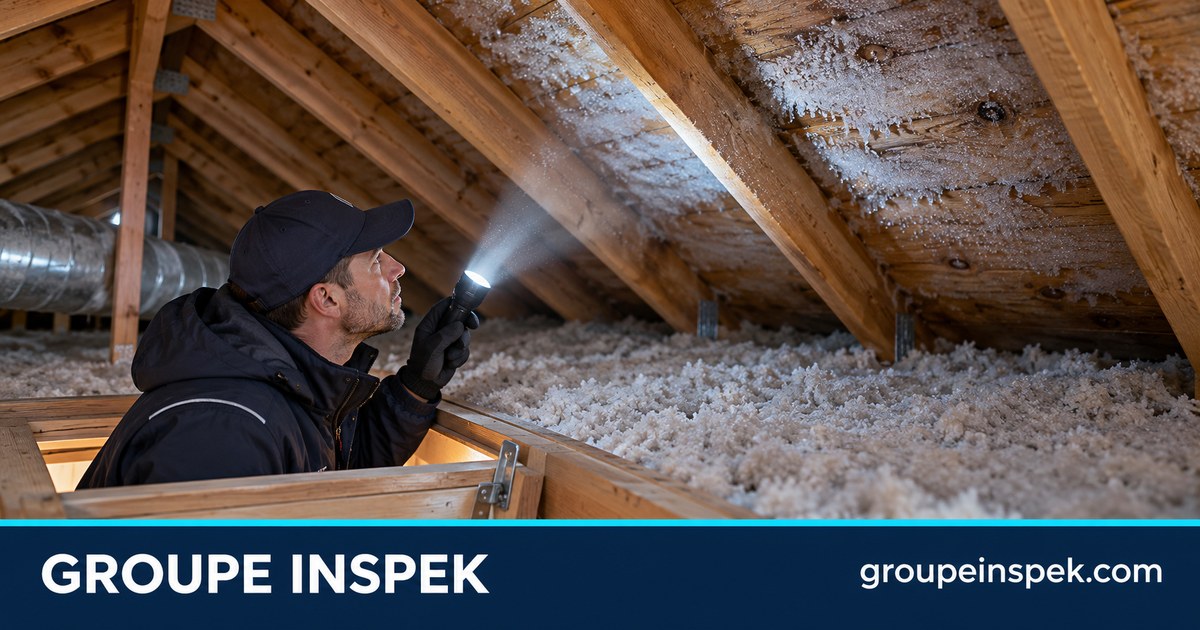
A sound attic limits air and vapour movement from the dwelling, maintains consistent insulation and allows the intended ventilation path without obstruction.
Common indications
Frost or water on roof sheathing, staining, nail corrosion, compressed insulation, odour, marks around ducts and unusual snowmelt patterns.
Air leakage
Access hatches, light fixtures, ducts, partition walls, plumbing and discontinuities may allow indoor air upward. Air sealing must respect fire-safety clearances around heat-producing equipment.
Ventilation and insulation
Soffits should remain clear where the design calls for airflow. Insufficient or displaced insulation creates heat-loss areas. Increasing ventilation without addressing air leakage may fail to correct the source.
Ice dams
Snow melts on a warmer roof area and refreezes at the eave. Trapped water may move beneath the covering. Durable corrections generally address heat and air reaching the roof as well as resulting damage.
Sources and references
The following sources frame and support this content. The service agreement and the standard applicable to the assignment remain controlling.