
Aluminum wiring is not automatically due for replacement, but its connections deserve serious attention.
Found in many homes built from the mid-1960s through the late 1970s, aluminum branch wiring often raises questions during a transaction. The sound approach is to assess the actual installation rather than condemn the system based only on conductor colour.
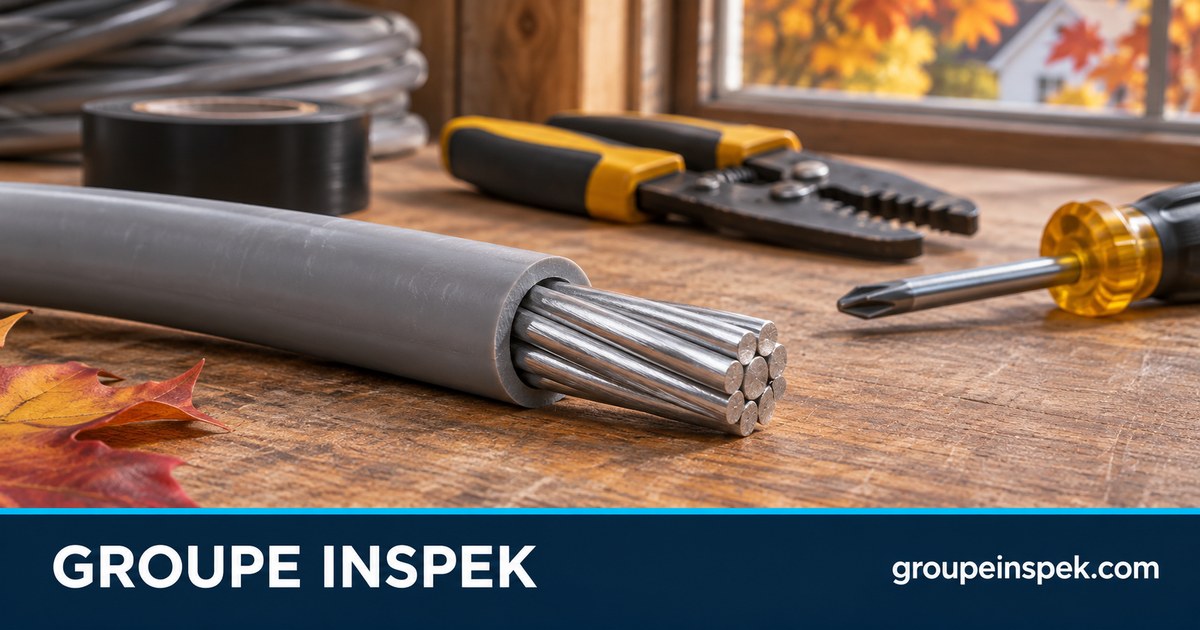
Reported problems primarily involve overheating terminations, incompatible devices and improper alterations. A general inspection may identify indications; only a licensed electrical contractor can systematically open, assess and correct connections.
Why do connections require particular attention?
Aluminum oxidizes, expands and contracts differently from copper, and can be more easily damaged during termination. A loose connection, nicked conductor or copper-only device may create resistance and localized overheating.
Which indications may be visible?
- Unusually warm receptacle or switch plates.
- Discolouration, melted insulation, hot-plastic odour or crackling.
- Flickering lights or intermittent equipment operation.
- Recent devices connected to aluminum circuits without an identifiable approved method.
The absence of these signs does not prove that every termination is sound. Some failures may develop without an obvious warning.
What do CO/ALR and AL–CU mean?
These markings identify devices or connectors recognized for the indicated conductors. A copper-only device should not directly receive an aluminum conductor. Depending on conditions, a contractor may use a compatible device or an approved copper-to-aluminum transition installed according to its listing.
Must all wiring be replaced?
Not automatically. The Electrical Safety Authority states that aluminum wiring can be safe when connections and terminations use compatible components and proper techniques. Depending on condition, insurer requirements and configuration, the response may range from assessment and targeted corrections to replacement.
What an inspection can — and cannot — establish
The inspector can identify visible conductors, report suspect devices or connections, document heat-related damage and recommend assessment. A general inspection does not dismantle every receptacle or light fixture. A complete review requires a licensed electrical contractor to access connection points and may need to be documented for the insurer.
Sources and references
The following sources frame and support this content. The service agreement and the standard applicable to the assignment remain controlling.